
Coup de cœur
With Ivorian visual artist Bosson Koffi Franck Élisée, known as Sainté
Born in 2000 and a graduate of the Fine Arts program at the Institut National Supérieur des Arts et de l’Action Culturelle (INSAAC) in Abidjan, the young Ivorian painter Bosson Koffi Franck Élisée, known as Sainté, explores texture as a record of scars. Through his work, he explores emotional identity, individual identity, and freedom. His artistic approach emerged from an immersion into madness at the Bingerville Psychiatric Hospital in Côte d’Ivoire and following clinical consultations. For him, art is a passion in the strongest sense of the word—that of a trial. He is our Coup de Coeur.
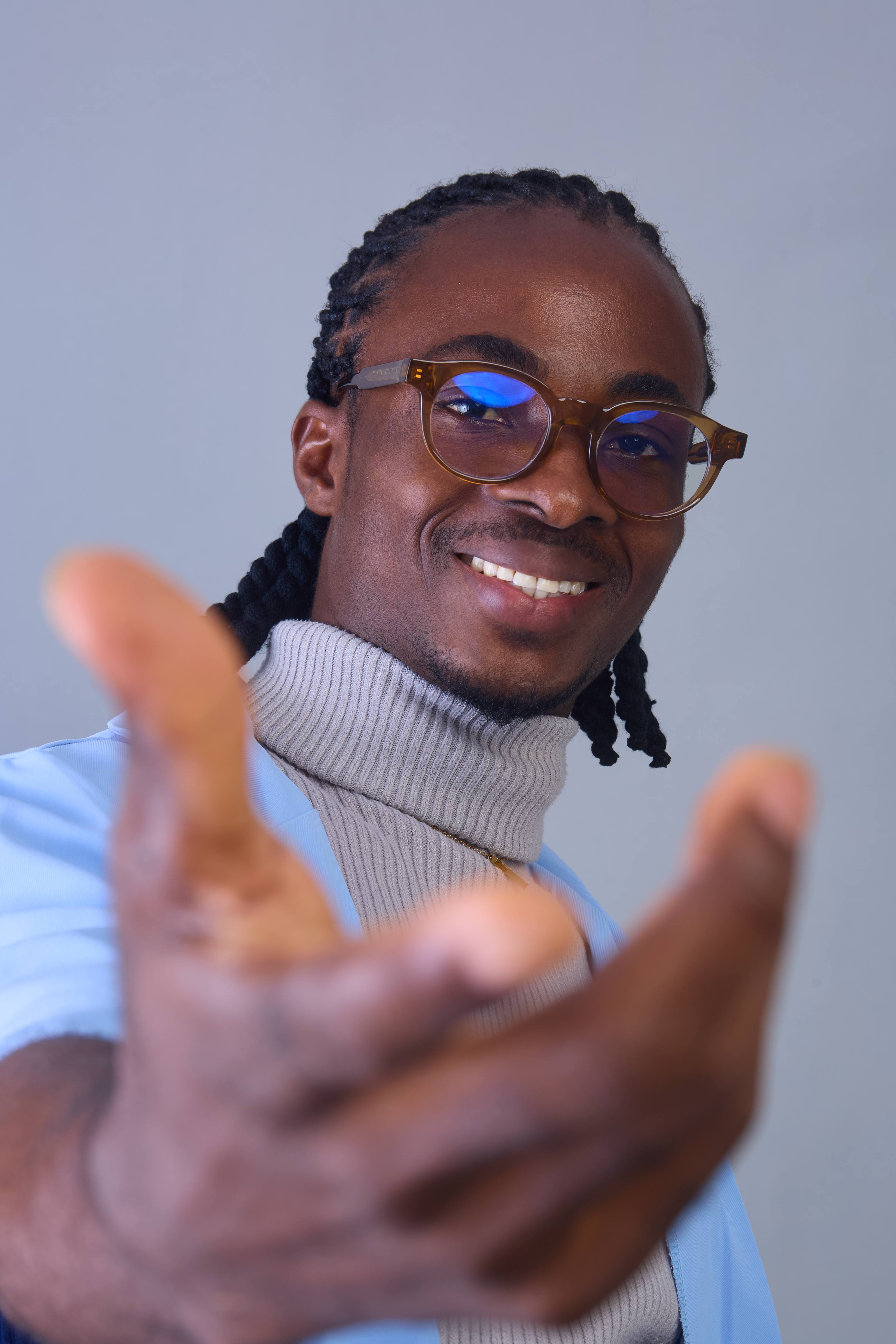
Asakan: To start our interview, would you like to introduce yourself?
Sainté: My legal name is Bosson Koffi Franck Élisée. I was born on December 24, 2000, in Prikro, in the Iffou region, in central-eastern Côte d’Ivoire. My parents called me Saint Élisée, after a figure from the Bible. My father still sees me as a prophet and often calls me “my prophet.” It was undoubtedly him, along with my mother, who gave me that name.
Asakan: How would you define art? And how do you view contemporary art?
Sainté: Art is a passion, in the sense of the Passion of Christ—one of the greatest trials in the world. That’s my personal definition. And passion is what we’re willing to die for, to lose everything we have. If today I have just one 10,000 CFA franc bill left and I feel the desire to paint, to create a work of art, then—if I truly have a passion for art within me— I’ll use those 10,000 CFA francs to bring it to life, even at the risk of starving to death.
As for contemporary art, it’s an asset, especially for artists, because it allows us to draw from all artistic movements to create. I can decide to blend classicism and surrealism, or hyperrealism and surrealism. For example, the Surrealists are, in a way, confined or restricted: they must create only Surrealism. The contemporary artist, on the other hand, can express themselves through all these movements. That’s what makes things even more interesting.
Asakan: When did you realize you would devote your life to art?
Sainté: Honestly, I didn’t know, but I loved art. Starting in first grade, our teacher would have us go outside in front of the classroom to draw on our slates, and he liked it. So I decided to keep drawing. In fifth grade, I wanted to pursue music, and I planned to attend INSAAC for that, without knowing that there was a college of fine arts on the same campus.
Between seventh and eighth grade, I rapped with friends. Then I moved to Guiglo to attend eighth through twelfth grade. I was also a Scout leader there and organized a camp for which I needed signs. I looked for a friend who was a calligrapher or painter, but couldn’t find one, and that really bothered me. It made me angry, and since I was already drawing anyway, I decided to buy the supplies and paint them myself. The result: my neighbors in the courtyard and passersby really liked it. That’s how I decided to paint on plywood until my senior year.
After graduating from high school, I came to Abidjan. It was my uncle who told me about INSAAC and its college of fine arts. I discovered some extraordinary things there and decided to pursue art, even though I didn’t always realize that visual artists existed. It was during the prep classes for the first-year college entrance exam, around 2021–2022—about five years ago—that I discovered painting. I’d seen a museum book featuring works by artists that made a very strong impression on me. I decided to push myself further, because when I start something, I want to excel at it. That’s when I made it my career.
Asakan: As an artist, how would you define yourself? How did you come to develop your own distinctive style?
Sainté: At my core, I’m a nonconformist. Nonconformists say what they believe and what they understand, without waiting to see how others receive or interpret it, and they go where others don’t expect them to go. That’s how I approached the issue of mental health in my work. I wanted to understand the boundaries between the logical and the illogical, between the rational and the irrational. I wondered why there are more and more people wandering the streets in a state of mental distress, and why we so often look away from them. So, I began to study madness as a pretext for surrealist creation. I visited the psychiatric hospital in Bingerville, a suburb of Abidjan, and attended clinical consultations with a psychiatrist. It was there that I discovered the human being in his or her mental and emotional dimensions.
Today, my work has taken on greater depth: I am interested in emotional identity and individual identity, always in a quest for identity and freedom. In society, the education we receive—whether from our families, at school, or through religion—shapes us into someone we might not have wanted to be. We are shaped to obey, or at least to conform to an established model. Yet each of us is called to an individual mission and should therefore be educated in accordance with the purpose for which we were born.
My artistic style has evolved from this exploration of madness. I sought to make the marks of the past visible: the scars, the aftereffects, the rejection, the experiences. I “scarred” them with a palette knife, which created marks and textures. Then, I wanted to achieve that texture without the knife strokes being visible. So I worked on a background with a palette knife, then tried to scrape it away so that the texture remained without the tool being detectable.
It took many attempts to get there. You can’t scrape a smooth surface, so I applied more paste, which creates texture. My first attempt at scraping produced a result similar to the work of a classmate, Touré. I wrote to him to tell him so, but he didn’t reply, so I kept going. I also used an eraser to rub paint off canvases, working on a layer of paint powder. The utility knife didn’t work—the paint was too thick to come off—and it was the steel wool that gave me the result you see here. This texture refers to lived experience, scars, history, events, and the past.
Asakan: What are your artistic inspirations and influences? What themes and emotions do you try to convey in your works?
Sainté: It all started when I saw a piece by Augustin Kassi from his earlier period: a black-and-white work with a bit of texture. I wasn’t sure if it was texture or just splatters of paint, but I really liked it. I also saw the works of a young artist I don’t really know, who used a utility knife to scratch out his backgrounds. That inspired me as well.
However, I can’t say I’ve been deeply influenced by any one person. Some artists are shaped by a master, but I’ve done a lot of exploring on my own. I’ve explored many techniques, and if I were to analyze all my works, they would reveal as many styles as there are years of practice. Before, I was really lost. It was through this constant searching that I arrived where I am now and decided to keep going. So above all, it’s the culmination of a personal journey.
My themes are emotional identity, individual identity, nonconformity, and freedom.
The emotions I seek to convey are melancholy, distress, relief, and also confidence. The people I’ve met in therapy experience everything to the extreme: when it’s joy, it’s joy to the extreme; when it’s sadness, it’s sadness to the extreme. Their depth is hard to describe unless you’ve been through it yourself. Sometimes their emotions clash, and they struggle to navigate them. That is why emotional turmoil is also part of my research.
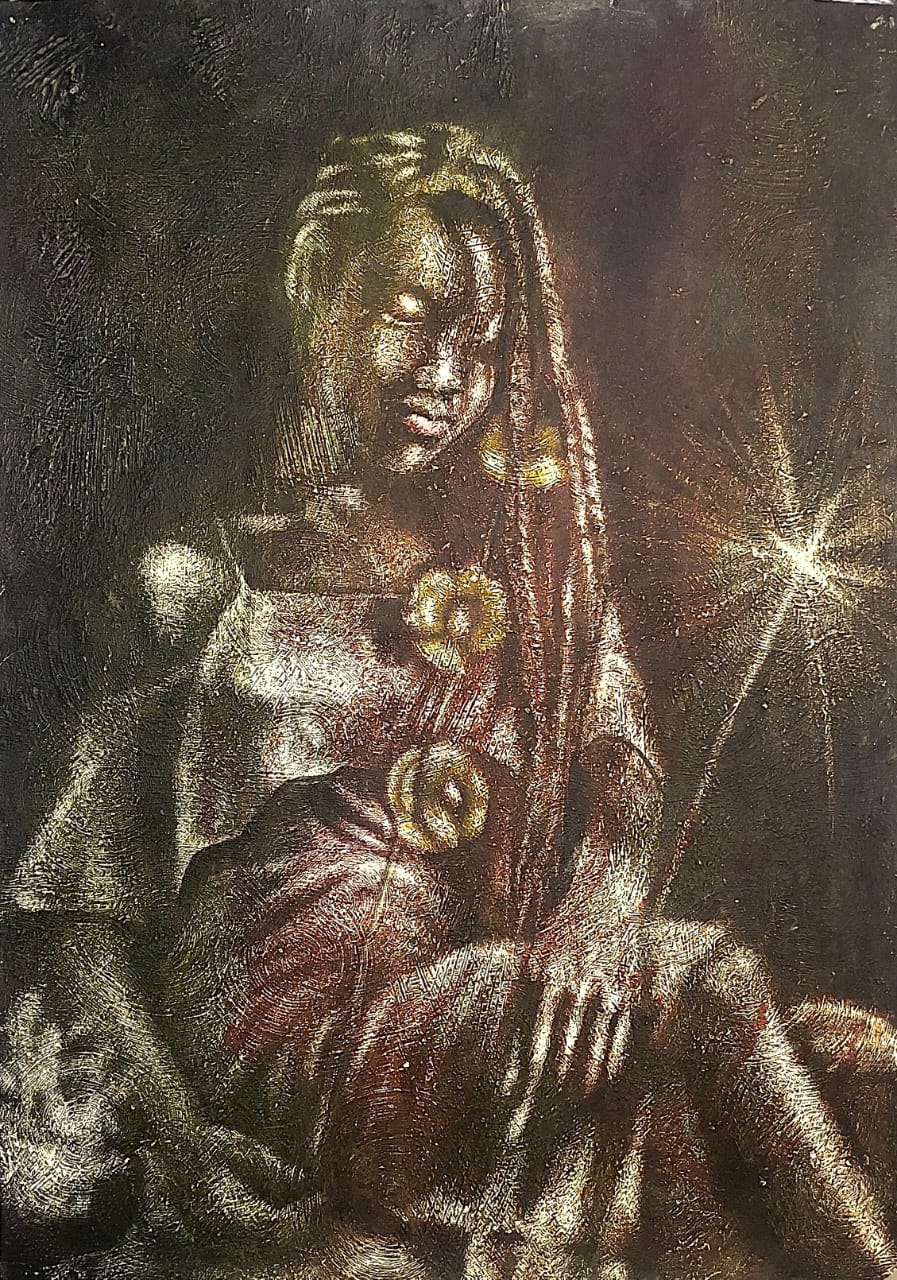
Sainté, “Introspection 1,” 2026. Collage and scraping, 101 x 72 cm. Courtesy of the artist
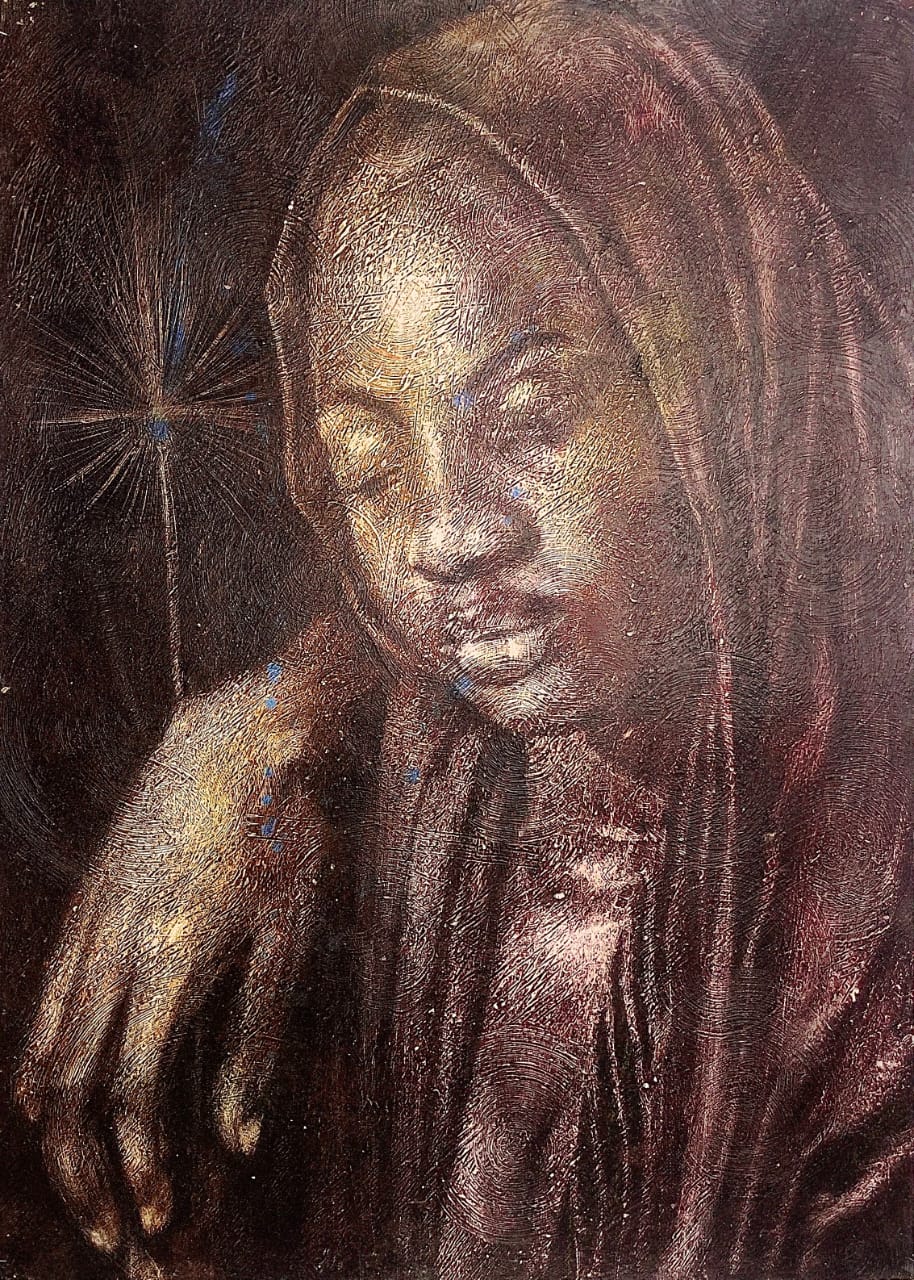
Sainté, “Introspection 2,” 2026. Mounting and scraping, 101 x 72 cm. Courtesy of the artist
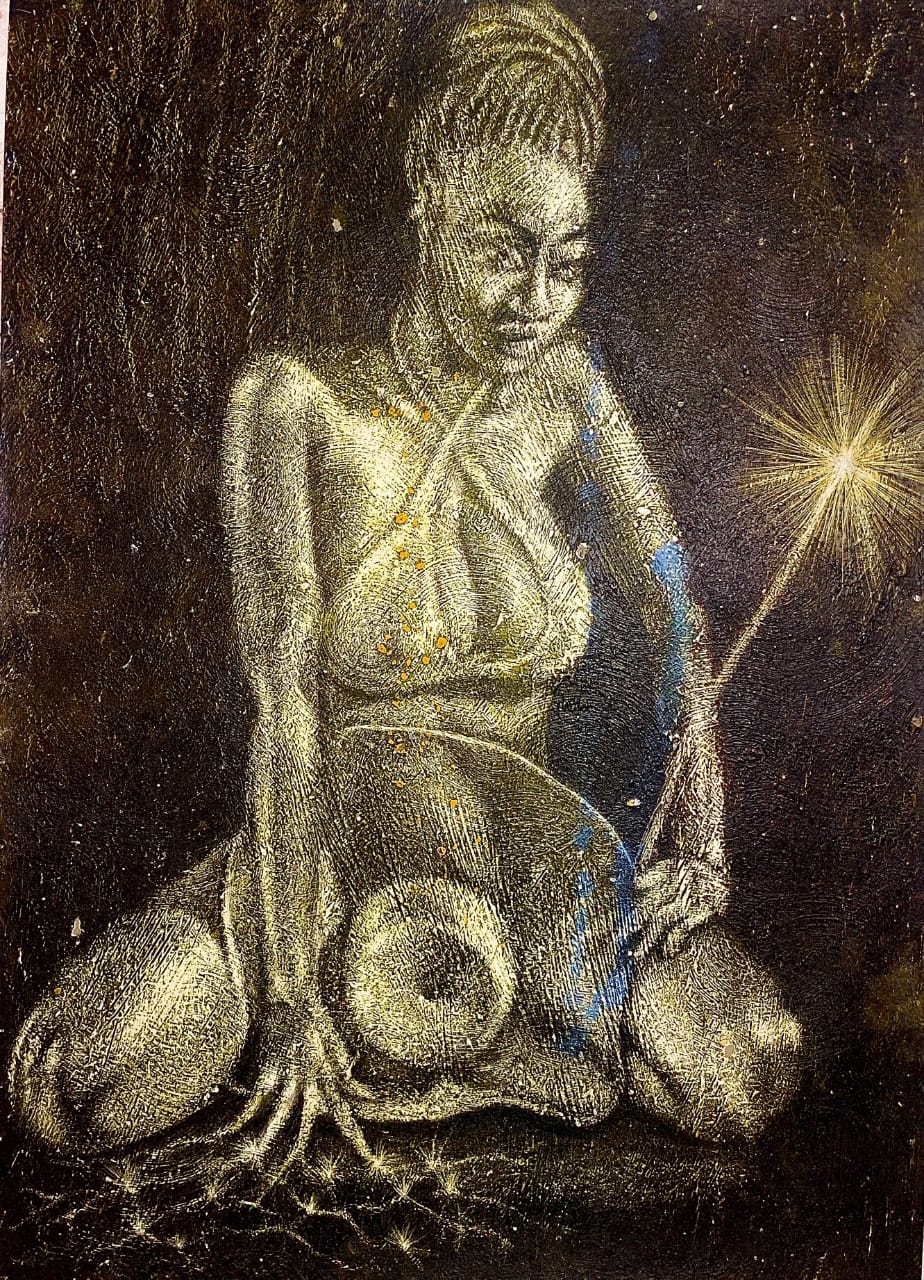
Sainté, “Reconnection 1,” 2026. Mounting and scraping, 101 x 72 cm. Courtesy of the artist
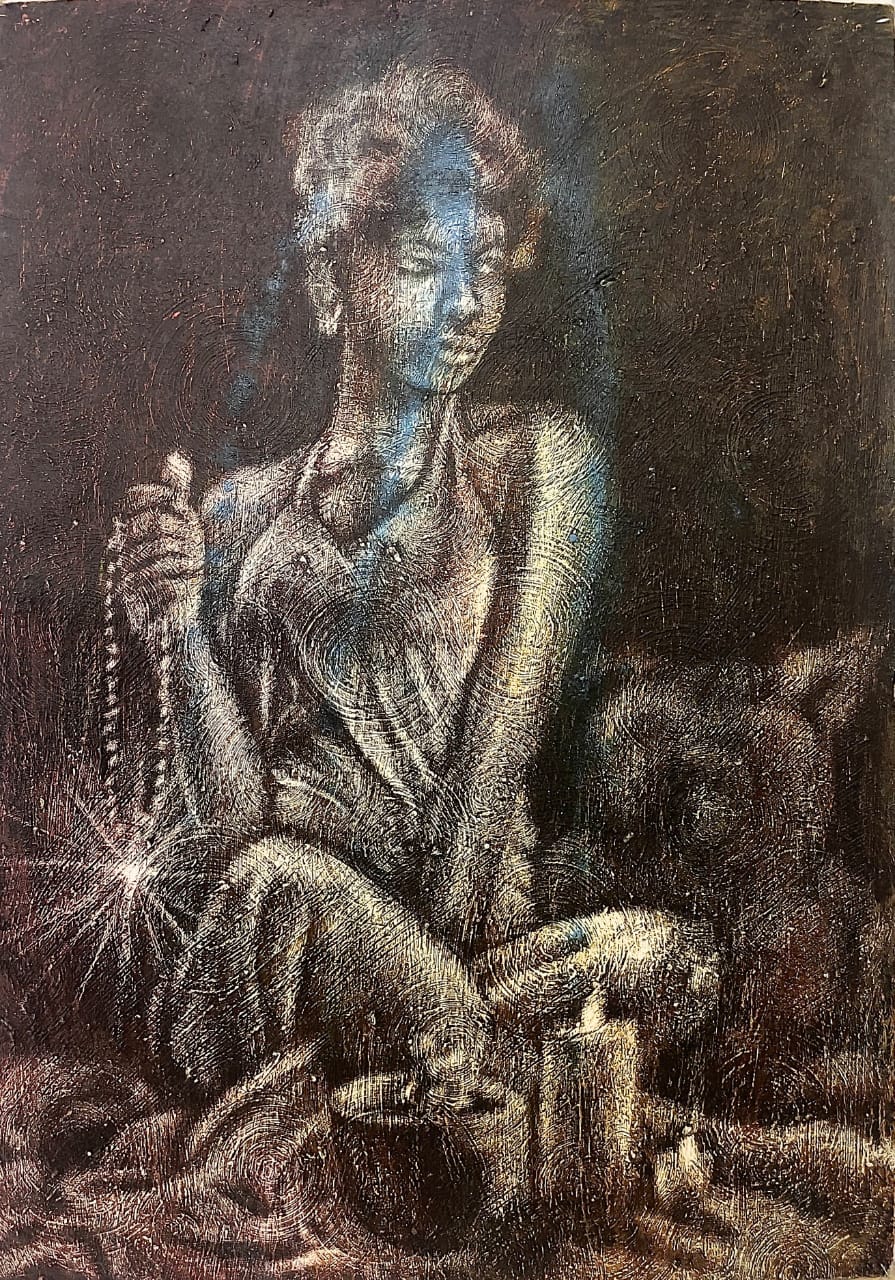
Sainté, “The Invoker,” 2026. Mounting and scraping, 101 x 72 cm. Courtesy of the artist
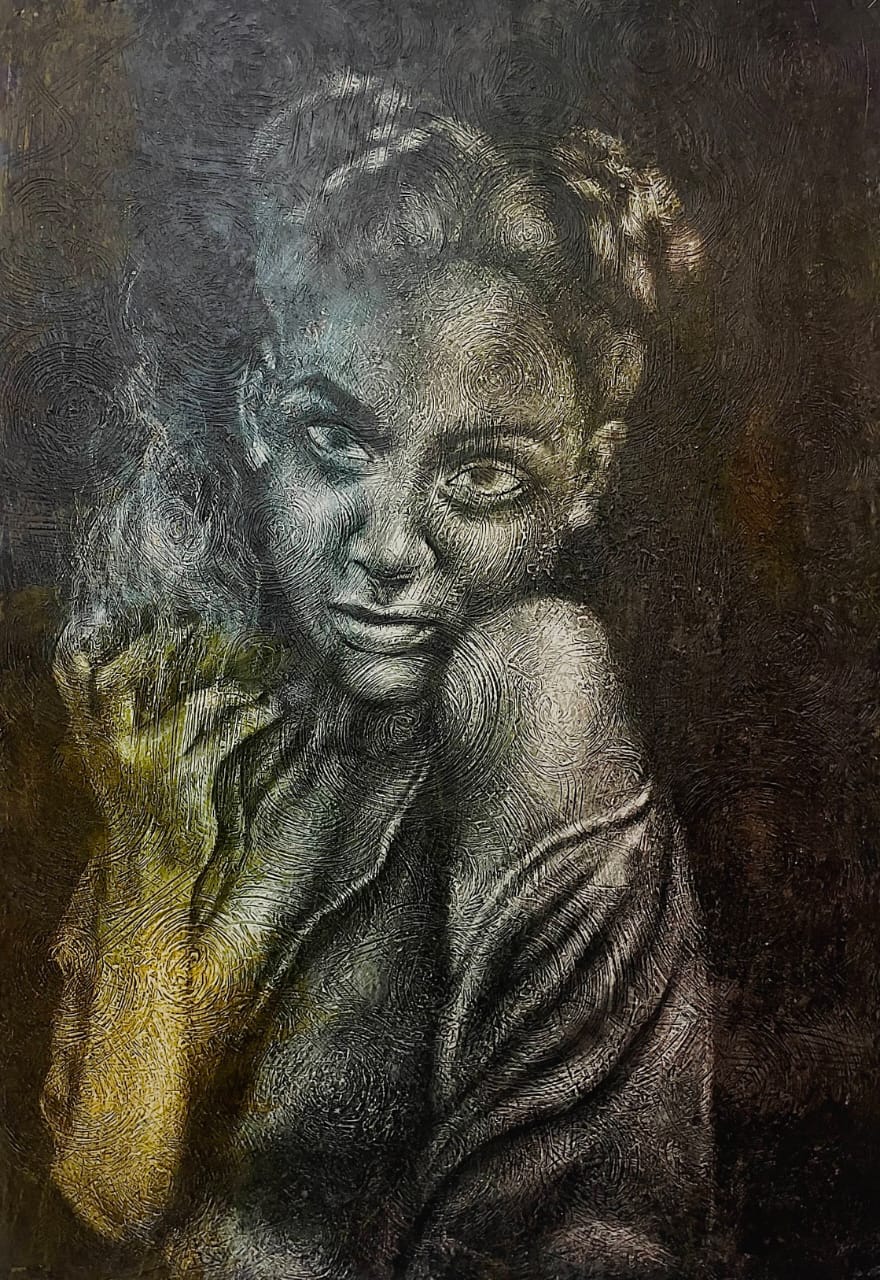
Sainté, “The Epiphany,” 2026. Mounting and scraping, 101 x 72 cm. Courtesy of the artist
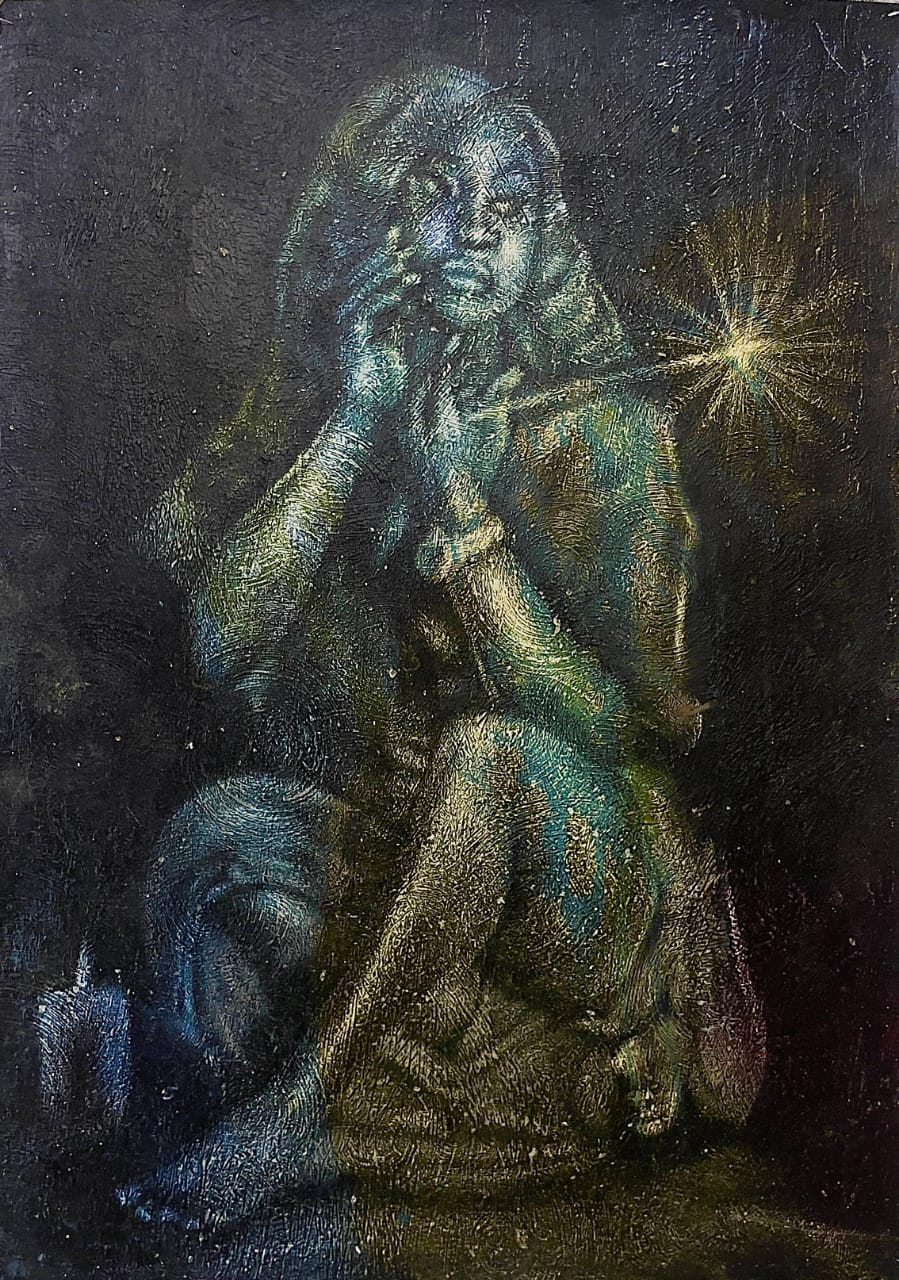
Sainté, “Revelation,” 2026. Mounting and scraping, 101 x 72 cm. Courtesy of the artist
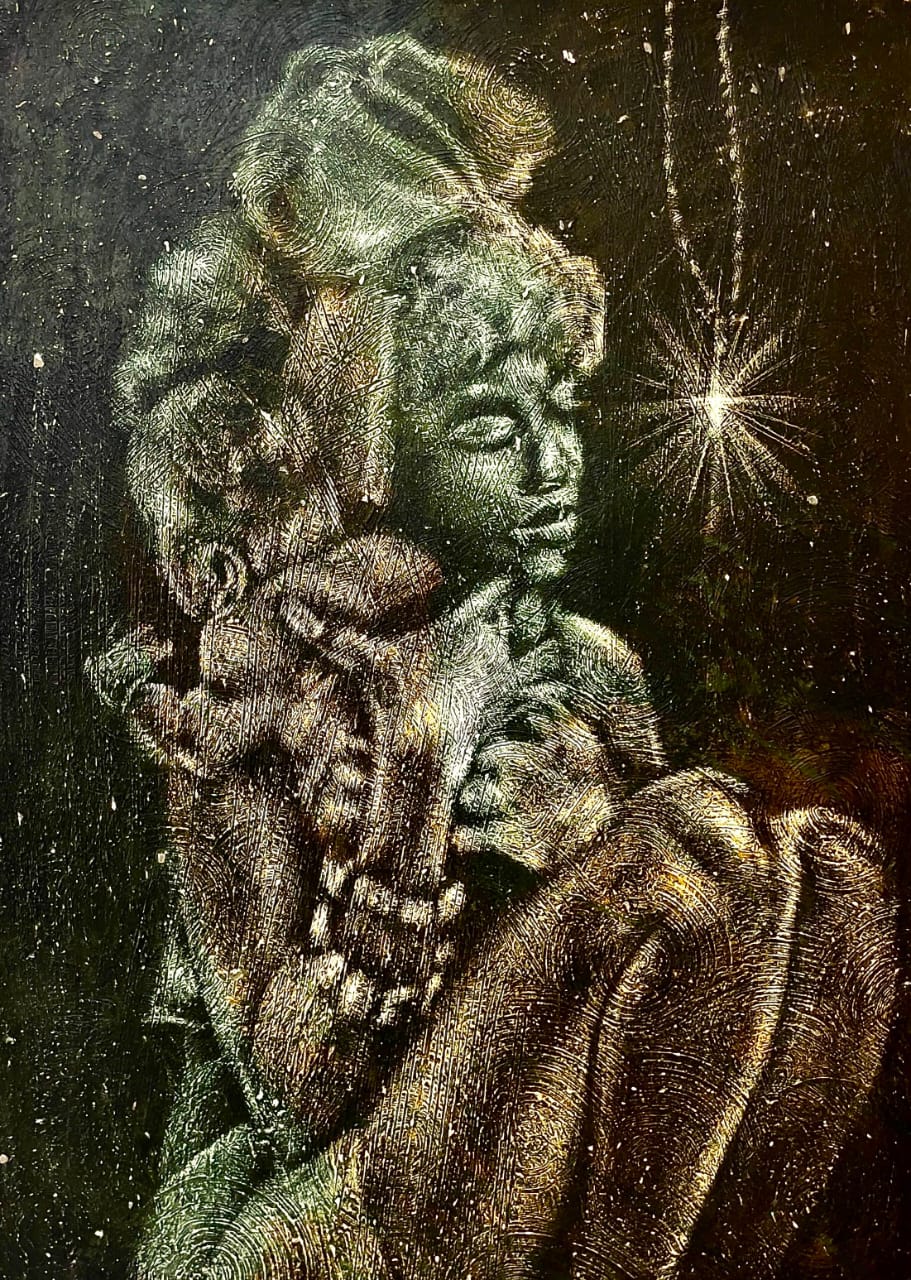
Sainté, “Hope,” 2026. Mounting and scraping, 101 x 72 cm. Courtesy of the artist
Asakan: How is your work perceived by the public? And by the art community?
Sainté: At exhibitions, I first receive feedback from the general public, then from other artists. The responses are positive. One person told me they felt a sense of confidence standing before the work—a sense of relief, an inner peace. At a recent group exhibition at the Sofitel in Abidjan, visitors were fascinated and spent a long time looking at the pieces. They rarely ask questions, amazed by the technical skill involved. Many want to touch the artwork. When I sense that it truly moves them, I begin to explain that this texture refers to wounds, scars, and past experiences.
Among artists and the art community, it’s the technique that captivates. During the Abidjan Art Fair, Cédric Tchinan was there and really appreciated the technique. He didn’t ask me what I was working on or why I was doing it; he just acknowledged the form. I think that’s because he’s seen how my work has evolved. In the meantime, he had approached me on behalf of someone who was looking to buy artwork. I’d sent him pieces from the previous year and this year, and he told me honestly that only this year’s works interested him. I conclude that, while I’ve evolved technically, there’s also a maturity of spirit evident in my work, and that’s perhaps why he didn’t try to delve deeper into the subject matter. I know that my subject matter is thought-provoking and profound. For those who are interested, it’s always a pleasure for me to explain the history of my artistic approach, why I use this medium, and how I achieve this particular effect.
Asakan: What advice would you like to share with other young people eager to pursue art?
Sainté: First, you have to ask yourself why you want to make art. If it’s to please others or to meet your family’s expectations, there’s no need. But if you understand what art is and want to commit to it, you’ll need financial support, practical support, and the support of your loved ones.
When you make it your passion, you have to be ready to die for it. There will be moments of depression, because this life drains your emotions, your money, your time, and your mental energy to the point where you no longer know how to make up for it all. Without anyone to support you financially and emotionally, you lose your artistic sense. So you have to have or seek out support, and above all, be aware that when you’re driven by passion, you’re not just a human being.
Interview by: Ange Alvine Yao.
For more information on the work of Bosson Koffi Franck Élisée, known as Sainté, you can follow his Instagram account @s_a_i_n_te.
À lire également
With Gabonese Visual Artist Uka la Bruja
“It can be difficult to express, quickly and in simple words, concepts that only images can describe. ” So, in addition to being a novelist, Uka la Br…
With Ivorian Conceptual Sculptor and Visual Artist Ibrahim Touré, known as Massa-Chula
Massa-Chula, whose real name is Ibrahim Touré, is a conceptual sculptor, visual artist, and photographer born in 1997 in Abidjan, Côte d’Ivoire. Altho…
With Ivorian painter Adjoua Kouamé, known as Adjoua
Adjoua Kouamé, also known by the pseudonym Adjoua, was born in Abidjan in July 2000 and holds a bachelor’s degree and a professional master’s degree i…
Featuring the Ivorian twin visual artists Tchinan Cédric and Ezan Franck
Born in 1994 in Abidjan, Ivory Coast, twin brothers Tchinan Cédric and Ezan Franck—still known by the pseudonym Tchinezan—have developed a body of wor…
Commentaires