Le Grand Entretien
Marie-Sophie Eiché-Demester: “I’m very lucky because the artists I collaborate with are building amazing international careers.”
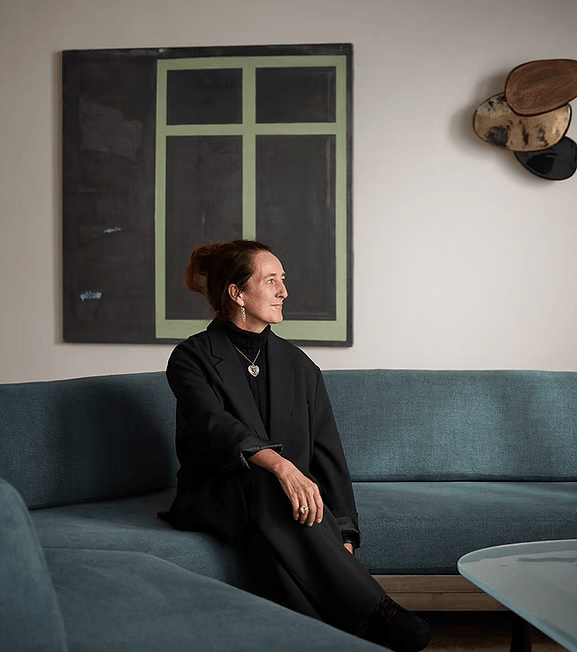
As an art advisor to private individuals and public organizations and a founding member of the ATOKE Association—Les Enfants de Saint Dominique, which supports the most vulnerable children—Marie-Sophie Eiché-Demester is also the founder of the Atlantic Art Space Gallery, located in Ouidah, Benin. As asakan kicks off the new season this week, she is our very first guest of the year and shares with us her passion for art and artists, the ins and outs of her project, her perspective on the crisis facing galleries, and her advice. Interview.
Asakan: Tell us a little about yourself, your background, and your first experience with art.
Marie-Sophie Eiché-Demester: I come from a family where creativity plays a major role. They’re everyday inventors, moving between painting, sculpture, and culinary art—I’ve always seen every member of my family “making” and “creating.”
I studied business administration, then I met a young gallery owner in Paris who taught me the ropes of the art world.
My husband, Jeremy Demester, is also an artist. My whole life revolves around art!
Asakan: Why did you choose to become a gallery owner?
Marie-Sophie Eiché-Demester: In 2000, I met a Parisian gallery owner who was still very young at the time: Kamel Mennour. He gave me my big break, and I spent 22 years learning the trade by his side. It was a revelation and a natural fit in my professional life.
Asakan: What artistic direction do you follow? How do you select your artists?
Marie-Sophie Eiché-Demester: Atlantic Art Space is an art gallery that showcases the West African art scene—and more specifically, the Beninese art scene—through four exhibitions a year. The gallery is ideally located next to the Zinsou Foundation Museum in Ouidah. What drives me is the development of artists in general and making my expertise and network available to them.
Asakan: Of all the ways a gallery can support its artists, which do you appreciate the most?
Marie-Sophie Eiché-Demester: At Atlantic, I support and participate in the production and development of my artists’ exhibitions.
I also love books, and I’m happy when I can collaborate on or produce a monograph that serves as a record of a project.
Asakan: If we were to ask you to assess your collaborations with your artists, what would you say?
Marie-Sophie Eiché-Demester: I’m very fortunate because the artists I collaborate with are building remarkable international careers: Georges Adeagbo has had a very rich institutional career in all the world’s major museums; Ishola Akpo and Moufouli Bello just participated in the latest Benin Pavilion at the Venice Biennale… There’s also the idea of discovering young talent—I’m thinking in particular of the Zountounnou brothers.
Asakan: What about your relationships with collectors?
Marie-Sophie Eiché-Demester: I work with many collectors, most of whom are European and American.
In Benin, even though there are still relatively few collectors, interest is growing.
Asakan: Could you elaborate?
Marie-Sophie Eiché-Demester: The culture of collecting is still relatively unknown in Benin. Few collectors open their doors to the public. But I see a great deal of interest from the diaspora based in Europe and the United States, with a focus on the country’s young artists.
Nobel Koty is now part of a major American collection following his exhibition with Atlantic Art Space.
Asakan: What is your perspective on the African contemporary art market?
Marie-Sophie Eiché-Demester: Thanks to Benin’s current policy aimed at revitalizing the art market and creating a vibrant ecosystem around Beninese artists (the Benin Pavilion at the Venice Biennale, the “Révélation” exhibition, and the creation of the Cotonou Museum of Contemporary Art), the Beninese art market is gaining increased international recognition. From a broader continental perspective, there are remarkable collections that will shape the history of an entire generation of artists. For example, one collection acts as an ambassador by lending its works for international exhibition projects; the Zinsou Foundation’s collection is regularly exhibited abroad (the “Cosmogonies” exhibition at MO.CO).
It is no longer rare to see artists from the continent represented by major, renowned galleries (Romuald Hazoumé and Amoako Boafo at Gagosian, Georges Adeagbo at Mennour, Ibrahim Mahama at White Cube, to name a few).
Asakan: In your opinion, what is the greatest challenge that contemporary African art will face in the coming years?
Marie-Sophie Eiché-Demester: We need a stronger presence of museums and art schools.
A museum is a secure space for the preservation of works of art. A museum is a repository of history for future generations. It allows for the creation of an archive and, potentially, a collection that will stand the test of time. It is a living testament to a country’s history.
Benin has fully understood this need and is putting it into practice through major projects such as the MACC (Cotonou Museum of Contemporary Art) and SEME CITY.
Creativity is flourishing among young Beninese artists. There is a pressing need for a leading art school to support them with a program tailored to the continent—a place where artists, historians, and curators can come together, and where students can interact and create artistic movements of their own.
Ibrahim Mahama fully understood this when he founded the SCCA TAMALE; similarly, the Zinsou Foundation recognized this essential educational role by establishing a special partnership with schools in Ouidah and organizing the “Petits Pinceaux” workshops every Wednesday.
Asakan: What role(s) can governments play in the growth of the art market?
Marie-Sophie Eiché-Demester: Governments have real opportunities to invigorate the market: by facilitating access to art, ensuring the safe and free movement of artworks, and, above all, providing tax incentives to businesses, which, in turn, will enable them to purchase works from galleries and artists. An entire ecosystem will benefit as a result.
The government can also commission artworks and public art installations. We’ve all seen the huge national impact of the exhibition “Art of Benin: Past and Present” at the Office of the President of the Republic of Benin. Hundreds of thousands of local visitors flocked to the exhibition in just a few weeks… Now that’s a fantastic initiative! Building on this success, the Beninese government has decided to promote the contemporary art scene internationally with a traveling exhibition titled “Révélation” in Morocco, the Caribbean, and France, followed by a National Pavilion at the Venice Biennale in 2024 (curated by Azu Nwagbogu).
Asakan: What do you think of art fairs, which are multiplying more and more and seem to be becoming indispensable for galleries?
Marie-Sophie Eiché-Demester: Art fairs are necessary and are a good way to raise the profile of galleries around the world. However, this model is losing steam today because it is very costly (fair participation and logistics) and is no longer suited to the realities of the current global situation (transportation and carbon footprint, etc.). Furthermore, collectors are increasingly seeking experiences that bring them closer to the artists.
Asakan: Meanwhile, galleries are closing… Some even think the art gallery’s business model needs to be reevaluated…
Marie-Sophie Eiché-Demester: It’s up to each individual to find their own balance and business model. What’s certain is that opening a gallery with high operating costs is a huge burden for a young gallery just starting out that has many investments to make. Personally, I prefer to invest in my artists’ production.
Asakan: Another major shift currently underway in the art market is the increasingly dominant role of new technologies. How is your role as a gallerist evolving in light of this challenge?
Marie-Sophie Eiché-Demester: I often say, “My phone is my office!” ” It saves me time and lets me connect quickly with the whole world, and since I live between two continents, it helps me stay connected! However, when it comes to artworks, seeing an image on a screen will never compare to the experience of physically engaging with the work.
Asakan: How do you envision the future of your gallery?
Marie-Sophie Eiché-Demester: I hold four exhibitions a year. And whenever possible, I support my artists in their off-site projects. For now, I’m not looking to expand further.
This gallery-showcase operates almost autonomously, with its large window opening onto different worlds… not to mention the invaluable presence of my collaborator, Koblaf Bonheur Aho, who has welcomed visitors and curated every exhibition since the gallery opened. He’s the smiling face of Atlantic Art Space.
Asakan: In your opinion, why is art so important to our lives?
Marie-Sophie Eiché-Demester: For me, art is synonymous with absolute freedom. It’s like a new encounter every time. I love letting myself be surprised by a work—by its beauty, its strangeness, and my understanding of it, which can unfold in several stages; I let it grow within me…
If I’m moved by a piece, it gives me incredible energy and a deep faith in life. It’s just magnificent!
Asakan: Finally, what advice would you give to those who’d like to follow in your footsteps?
Marie-Sophie Eiché-Demester: The first thing is to work with and for the artists. Be able to empathize with the global audience. Don’t limit yourself to just one market. We’re here to foster connections, to build bridges between generations and cultures.
Atlantic Art Space is located in Ouidah, next to the Zinsou Foundation Museum in Benin. For more information, visit atlantic-art.org or follow us on Instagram: @atlanticartspaceouidah.
À lire également
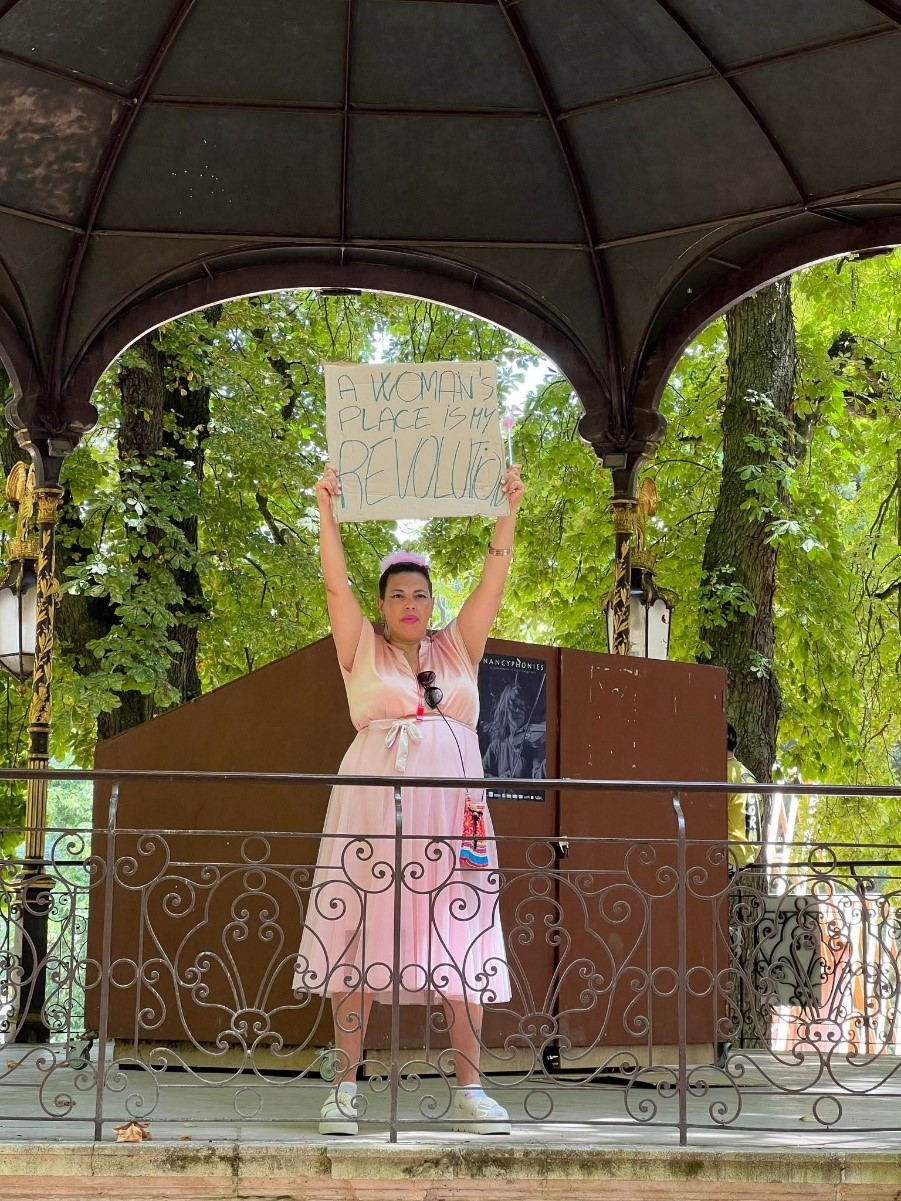
Aïda Patricia Schweitzer: “I had no choice but to fight, and subsequently, more broadly, to reject and denounce injustices, including the neglected realities faced by women.”
Known for her spectacular performances that explore the conditions faced by women in our contemporary societies, Aïda Patricia Schweitzer—a self-taugh…
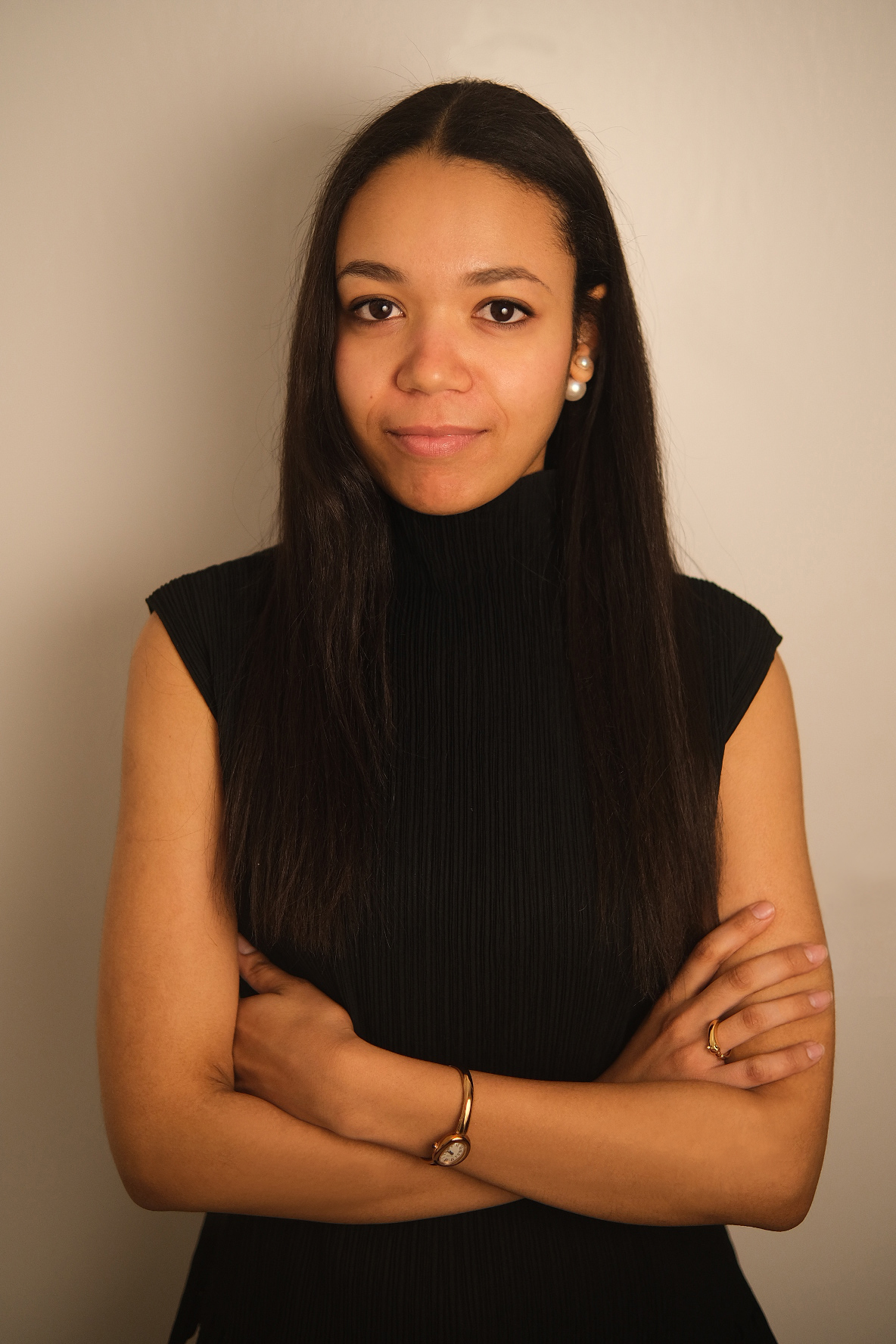
Nana Poulot: “Black Art in Japan is aimed at anyone who wants to develop opportunities, create or strengthen ties between these cultures, and foster this artistic and commercial dialogue in a space for meeting, (re)connecting, and
At just 23 years old, Nana Poulot has already made art her uncompromising calling. After gaining extensive experience in the field, she decided to con…
Christophe Person: “My goal when I exhibit an artist’s work is to show how a subject that at first glance seems specific to a particular geographical reality can also convey a universal message.”
A leading figure in the contemporary art scene and co-founder of the Ouagadougou Sculpture Biennial (BISO), Christophe Person opened Galerie PERSON in…
Agnès Brézéphin: “I don’t create activist art in the strict sense; I create art that focuses on healing and resilience.”
Agnès Brézéphin is the first Caribbean artist to win, on November 7, 2024, of the Léopold Sédar Senghor Grand Prize at the Dakar Biennale, with a priz…
Commentaires