
Le Grand Entretien
Wilfried Mbida: “So I’m not talking here about natural disasters or destruction, although the topic could be broadened to include that interpretation.”
Through August 1, 2026, the PERSON Gallery - Brussels is presenting the exhibition “Living with Water: Spirituality and Resilience,” bringing together the works of two artists from Central Africa: painter Wilfried Mbida (Cameroon) and photographer Baudouin Mouanda (Republic of the Congo), with water at the heart of their reflections: water. Born in 1990, Wilfried Mbida presents, in a particularly acclaimed series, how water—by seeping into interiors—can become a source of healing, purification, and fertility. Her works evoke the intangible presence of life in a silence where everything is emotion. We met with her to discuss this magenta-hued series as well as her artistic journey.
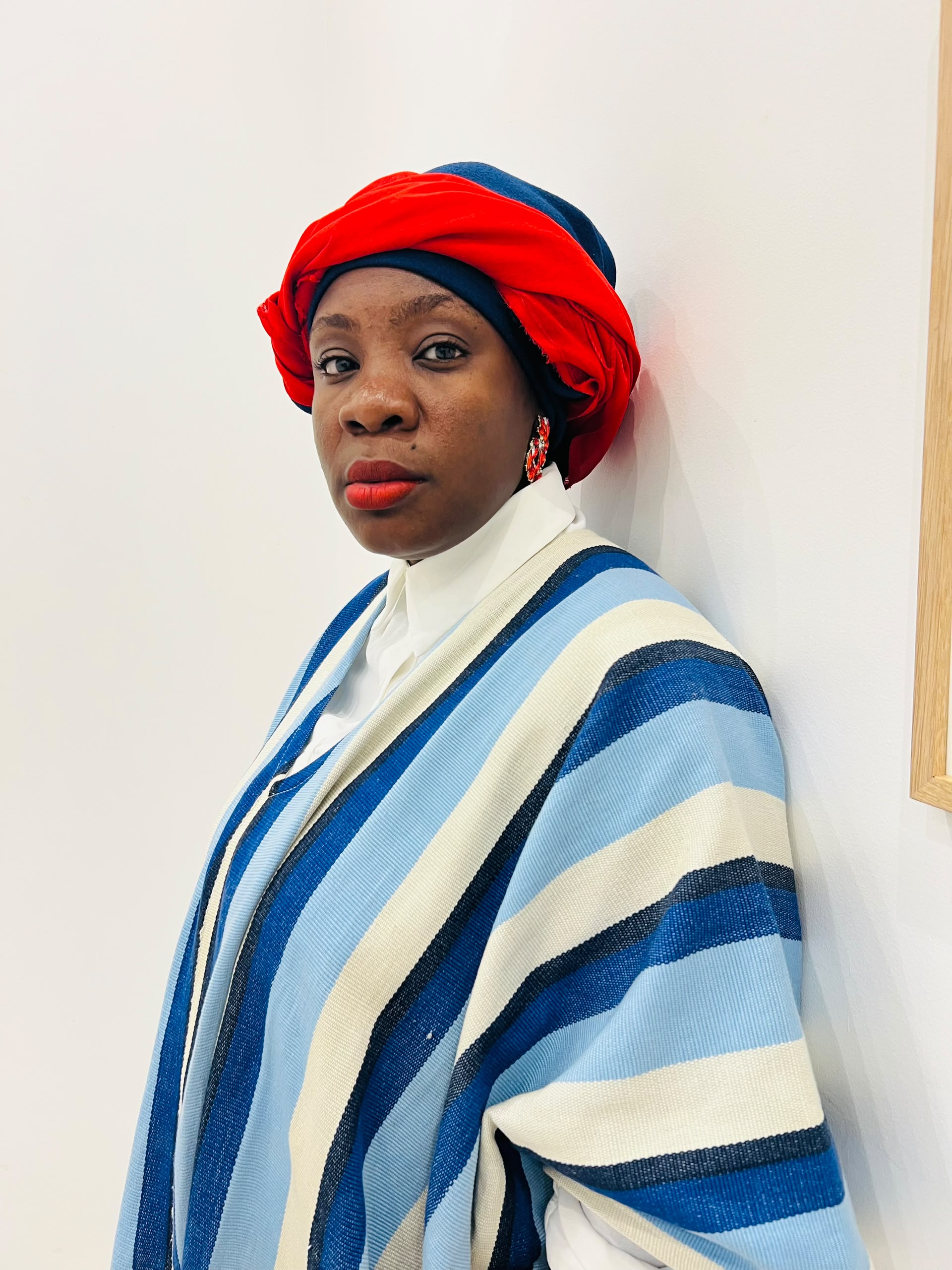
Asakan: How did you get into art? What’s your background?
Wilfried Mbida: I discovered the world of art thanks to my stepfather after earning my technical high school diploma in the apparel industry. Before that, I had no idea how vast this field was. I then enrolled at the Nkongsamba Institute of Fine Arts, located in the Mungo Department of the Littoral Region in Cameroon. The institute is affiliated with the University of Douala. That’s where I earned my Master’s degree in Fine Arts and Art History, with a concentration in painting.
Asakan: Your education combines art history and artistic practice. Can you explain this to us and tell us how art history enriches your practice?
Wilfried Mbida: From the moment we enter the Institute, the curriculum is the same for everyone through the third year. In the first year of the Master’s program, the school then offers us specializations. I chose the painting track. It’s important to know the history of everything in order to develop broader technical and conceptual understanding. It’s a form of skill.
Asakan: You’re currently one of the artists featured in the two-person show “Habiter l’eau: Spirituality and Resilience” at Galerie PERSON in Brussels. What are you expressing through this exhibition?
Wilfried Mbida: Indeed, I incorporate water into home interiors. I’m addressing fertility, purification, and protection. This work is quite spiritual.
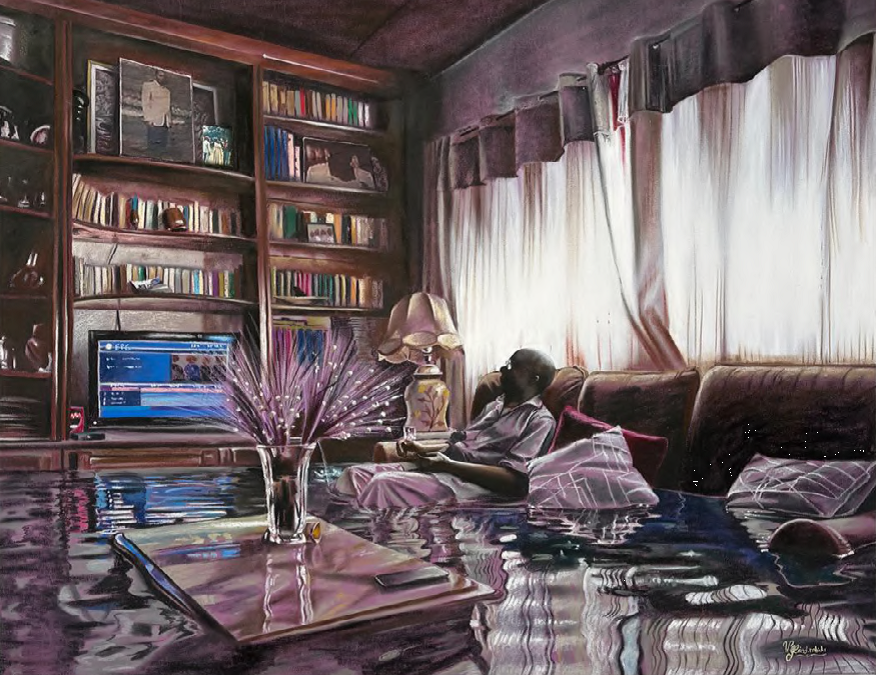
Wilfried Mbida, “Mami Ton,” 2026. Acrylic, oil pastels, and collage on canvas, 93 x 119 cm. Courtesy of the artist and Galerie Person
Asakan: So water is viewed as an essential component of life—an act of healing, purification, and fertility?
Wilfried Mbida: You know, in the local language, we say, “Water no get enemy.” Literally, this means that water has no enemies. Its flow, its presence, or its arrival are signs of a better tomorrow. So I’m not talking here about natural disasters or destruction, although the subject could be broadened to include that interpretation.
Asakan: In one of your exhibited works, titled “Justice” (2026), you’ve depicted a woman walking down a water-submerged corridor, surrounded by various artifacts. What were you trying to express?
Wilfried Mbida: The building where the photograph was taken is the former Bamoun Palace. It was built during the German colonial period.
During a visit, a woman in our group found herself standing in front of a light, next to an anthropomorphic statue holding a baby in its arms.
During our visit, we were told the story of a man of the law who administered justice without fear of the king’s status or anyone else’s. He possessed this impartiality and was known for this trait. The moment almost seemed unreal to me. I then thought of water, which cleanses and purifies.
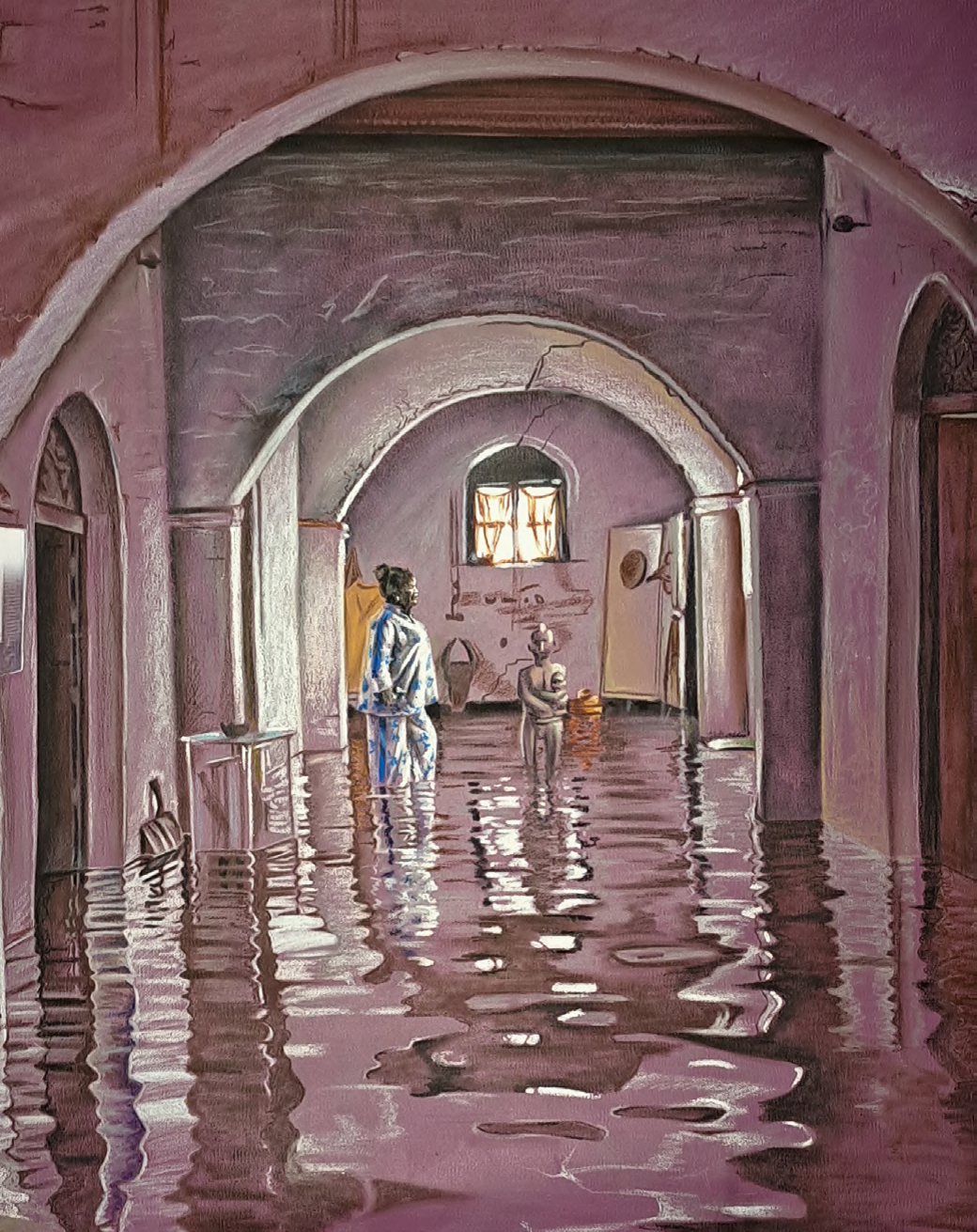
Wilfried Mbida, “Justice,” 2026. Acrylic, oil pastels, and collage on canvas, 117 x 139 cm. Courtesy of the artist and Galerie Person
Asakan: Is this interest in water a phenomenon of our times, or a logical development inherent to your own artistic practice?
Wilfried Mbida: It’s linked to my personal evolution and drives my artistic practice to adapt.
Asakan: Your work also exudes a certain freedom and sensitivity to color and silence. What do color and silence represent to you?
Wilfried Mbida: People often ask me about my choice of colors in this series, and it makes me laugh (laughs). I compose the colors by following my intuition. I don’t calculate; I don’t have a predetermined choice.
As for silence, it has been a part of my life for a long time. I know it well. Absence was its companion. I believe that, nourished by these concepts, my work finds a kind of echo.
Asakan: How did you go about your work? What techniques do you use?
Wilfried Mbida: First, I took photographs, then I drew on canvas, added water to the drawing, and worked on the whole piece using acrylics, oil pastels, and collage.
Asakan: Why did you choose to work primarily in large formats, with a few exceptions?
Wilfried Mbida: These are choices that adapt to the image in front of me. I simply follow my intuition.
Asakan: Which artists influence your work?
Wilfried Mbida: I’d say Edward Hopper, Hammershoi, Caravaggio, and Joël MPAH Dooh, to name just a few.
Asakan: What do you hope the public will take away from visiting the exhibition “Habiter l’eau: Spirituality and Resilience” at Galerie PERSON in Brussels?
Wilfried Mbida: Something—without being able to put my finger on exactly what it is.
Asakan: Over the years, your work has been featured in several major events, including the 2024 Dakar Biennale, BISO 2025, Art X Lagos 2023, and the 2023 Francophonie Games in Kinshasa. It has also been acquired by collections such as the Gandur Foundation for Art in Geneva and the Pas-Chaudoir Collection of Modern and Contemporary Art from Africa and the Diaspora. How do you explain this?
Wilfried Mbida: I suppose perhaps these events and collections see long-term potential in me and are interested in it. That’s the first explanation that comes to mind. I’d be happy to ask them directly to find out their perspective on my work.
Personally, it encourages me more than anything else.
Asakan: If someone asked you today what you’ve learned about yourself through your work, how would you respond?
Wilfried Mbida: I’d say: wisdom… and that I’m a sore loser (I laugh). But, more generally, what I’ve learned is vast, and if I had to summarize it, it would take too long. I also think that the process of getting to know myself is still ongoing.
Asakan: How did you come to be represented by Galerie PERSON? What has that experience brought you as an artist and as a person?
Wilfried Mbida: Christophe was in Cameroon, and while visiting various studios, he saw my work. That’s how we first met. What he doesn’t know is that I’d written to him on Facebook two years earlier to tell him about my work. He had replied but was surprised by the enthusiasm artists were showing toward him at that time. I didn’t press the issue because my work wasn’t yet firmly established in any particular direction. I was still feeling my way…
Today, collaborating with his gallery pushes me to surpass myself and, above all, encourages me to say to myself, “Experiment!”
Asakan: Is art really that important in our lives?
Wilfried Mbida: Yes, it’s important to view the world through multiple lenses—from the imaginary to reality, from utopian surrealism to hyperrealism, from figurative art to abstraction.
I believe that all these aspects allow for a better understanding of human societies, their cultures, and their customs and traditions.
Art is the eye of the world, and Einstein said, “Imagination is more important than knowledge. Knowledge is limited, whereas imagination encompasses the entire world, stimulates progress, and drives evolution.” So yes, it’s truly important.
Asakan: Do you have any advice to share with young artists who would like to learn from your experience?
Wilfried Mbida: No one has a monopoly on knowledge, so if you have an idea, experiment with it. Connect with those who are more experienced in your field—not necessarily older—exchange ideas, share insights, and step out of the studio to meet people. Sometimes, the key insights can be found in a casual conversation.
Asakan: Any final thoughts?
Wilfried Mbida: I’m looking forward to meeting you tomorrow.
Exhibition “Living on Water: Spirituality and Resilience” featuring artists Wilfried Mbida and Baudouin Mouanda, June 7–August 1, 2026, at GALERIE PERSON – Brussels, Rue Émile Claus, 63, 1180 Uccle, Brussels, Belgium Opening hours: Tuesday through Saturday from 2:00 PM to 6:00 PM or by appointment. More info: christopheperson.com.
À lire également
Agi: “Through this exhibition, I wanted to pay tribute to these Amazons, symbols of strength and resilience.”
At La Maison Rouge in Cotonou, painter Agi (born in Paris in 1971) is presenting, through November 29, “Les Merveilleuses,” an original exhibition cel…
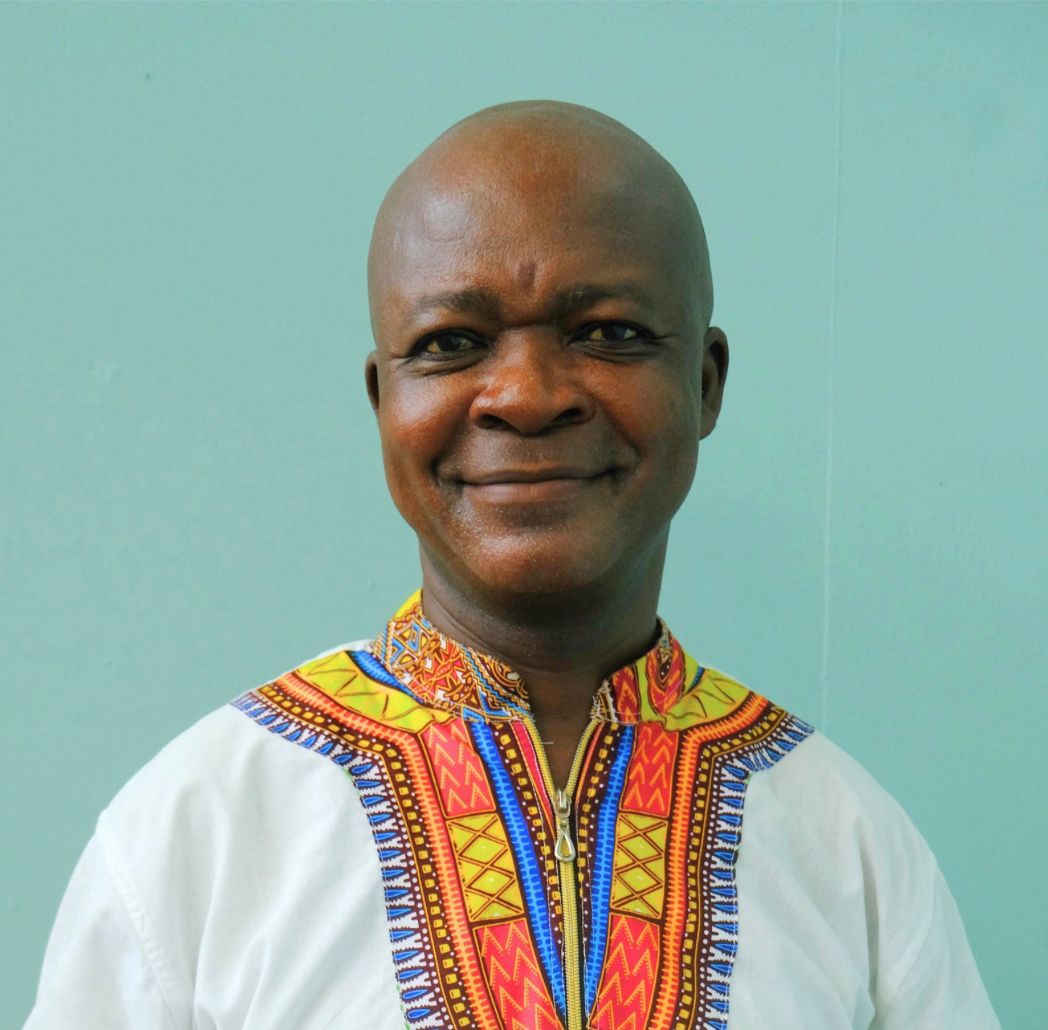
Raymond Tsham: “Belgians and Congolese, Africans and Europeans—we must overcome the divisions of history, unite, and foster genuine complementarity among our peoples.”
Featured in the exhibition “Living Legacies: Reinventing Forms” at the Galerie Person in Brussels alongside Mozambican artist Reinata Sadimba, Raymond…

Joseph Ntensibe: “… I try to capture the dramatic effect of tropical light on nature and translate that experience into painting.”
Today marks the final day of the group exhibition featuring the renowned Ugandan painter Joseph Ntensibe—who trained at the Makerere University School…

Rodrigue Glombard: “To me, these walls and floors are not merely fragments of urban architecture; they are repositories of the traces of time, human stories, and the transformations of the landscape.”
For some time now, we’ve been introducing you to the artists featured in the exhibition “Martinique, Intimate Cartographies,” on view at the Wall Hous…
Commentaires